Smoother Payments, Clearer Payouts
A tidy round of payment polish has landed, with clearer payout details, easier payments across related invoices, ongoing work toward our API and Business Central integration, and fewer little snags getting in the way of getting paid. Nice.
This release sharpens Benji Payments profile behaviour, improves reporting clarity, and delivers several behind-the-scenes reliability upgrades that help the whole platform feel steadier.
New Features
Smoother payments across related customer invoices
Merchants can now more easily pay multiple open invoices across parent and child customer relationships, even when starting from a child invoice. The payment flow can pull together related payable invoices into one cleaner path, reducing extra clicks and making complex customer hierarchies feel a lot less twisty.
Payout details now tell a clearer story
Benji Payments payout drill-downs now surface more of the transaction detail behind a payout, including warning context when a capture did not complete successfully. That makes payout totals easier to understand and helps reduce confusing empty or incomplete payout views.
(Groundwork) Smarter Customer Portal invoice visibility for Business Central
Business Central merchants can now control which invoices appear in the Customer Portal based on invoice number prefixes. Teams can hide matching invoices, or show only matching invoices, giving merchants a cleaner way to manage what customers can see and pay. Hidden invoices are also removed from portal balance calculations, so the customer-facing portal better matches the merchant’s intended experience.
(Groundwork) More complete Business Central invoice processing
Business Central invoice loading now handles multi-page invoice lists more reliably, so eligible invoices beyond the first page can be considered for auto-processing. For merchants with larger invoice volumes, that means fewer missed invoices and a sturdier sync experience.
(Groundwork) Business Central Level III data collection
Business Central can now collect Level III payment data, including invoice line details where available. That helps improve enhanced data coverage and supports better interchange and reconciliation outcomes for merchants using Business Central.
(Groundwork) Auto-processing forecast API
A new API gives company admins and integrations a clearer preview of which invoices are expected to auto-process and why others may be skipped. This gives teams better visibility before automated payments run, instead of waiting until something needs investigation.
(Groundwork) Stronger protection when generating API keys
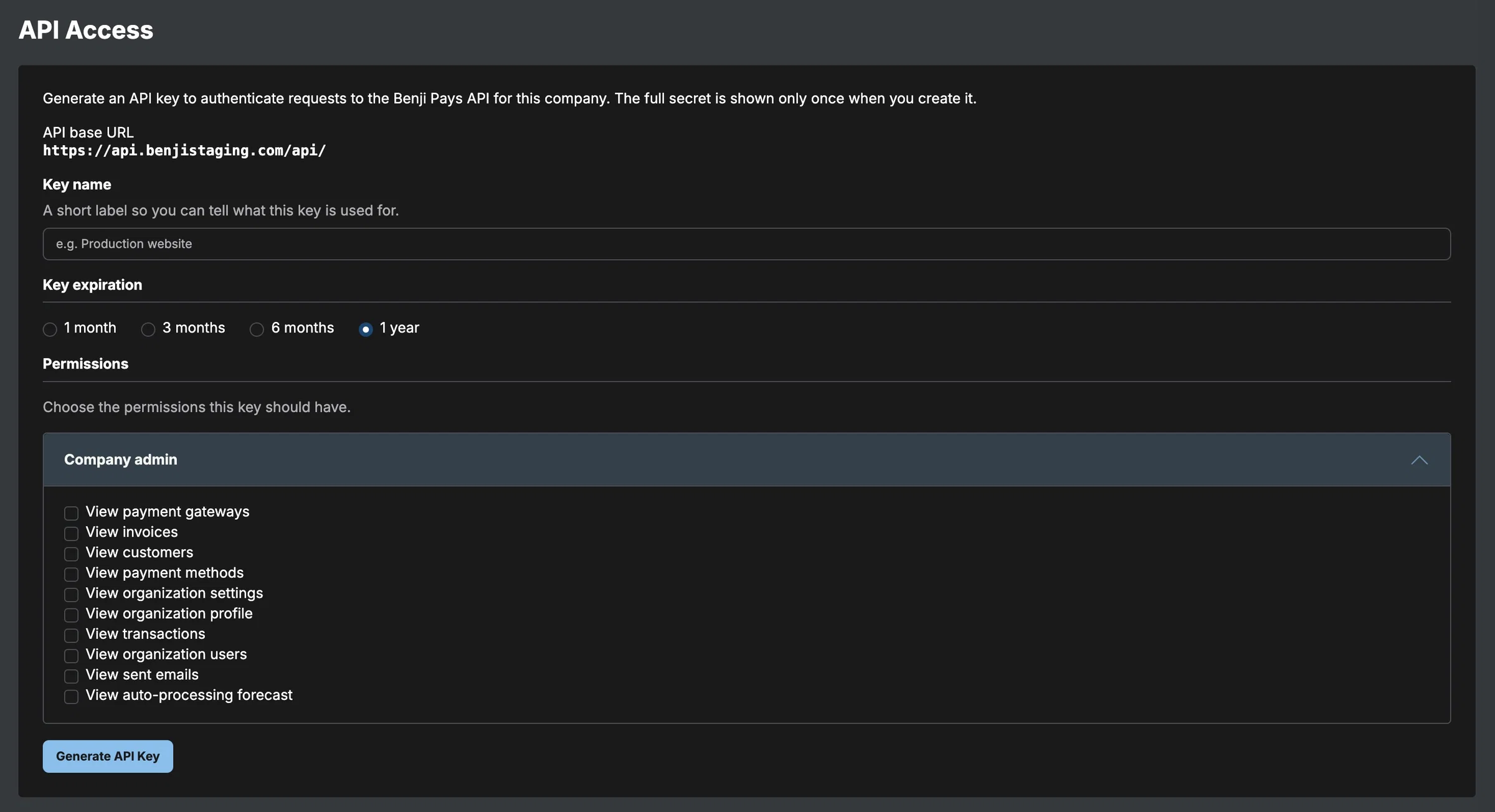
Creating a new API key now requires email OTP verification before the credential is issued. It adds one important checkpoint before organization data access is granted, helping merchants keep API access tighter and more intentional.
(Groundwork) More useful API/MCP access
The API now includes normalized organization profile access for the authenticated company, making it easier for AI and integration workflows to retrieve company details in a consistent format. Company admins can also list and inspect merchant-facing sent emails through the API, including filters and detail views, while internal/system email data stays out of the response.
(Groundwork) API key expiry reminders
Merchants can now receive proactive email reminders before API keys expire, plus a follow-up once they have expired. That means fewer surprise integration interruptions, fewer last-minute support scrambles, and a much calmer path to keeping connected systems running.
(Groundwork) Merchant API access and invoice responses are getting steadier
New API access controls now line up with plan entitlement or approved overrides, and invoice API responses are moving toward a cleaner, more consistent structure. This is groundwork for broader API availability, helping future integrators work with fields that are predictable, stable, and easier to understand.
(Groundwork) API sorting is becoming more predictable
API sort keys now better match the response field names customers and integrators see. That makes the API easier to document, easier to use, and less surprising as the next phase of API work moves forward.
Bug Fixes
Debit cards are blocked earlier when a merchant does not accept them
When a merchant has surcharging enabled and debit acceptance turned off, debit cards are now rejected during profile creation instead of being saved and failing later. That helps prevent unusable saved profiles and cuts down on repeat payment failures.
Billing form validation no longer leaves merchants stuck
If billing fields are invalid during Benji Payments sign-up, the page now shows validation and re-enables the form instead of leaving the merchant waiting on a spinner. This smooths out onboarding, especially when browser autofill gets a state or province value slightly wrong.
Tax-free enhanced payment data now stays accurate
Tax-free transactions now preserve the true zero-tax amount when enhanced payment data is included, keeping downstream payment details more accurate for invoices that do not include tax.
Customer transaction totals now format properly
The All Transactions table now formats fee and expected settlement footer totals correctly by currency, replacing a visible display bug with totals merchants can actually read.
QuickBooks Desktop sync keeps moving after Benji Payments journal entries
QuickBooks Desktop sync sessions now continue into customer and invoice sync when the previous phase ends with Benji Payments journal entries. That helps reduce the risk of skipped records and avoids extra manual sync-date cleanup.
iPhone users can paste MFA codes again
The MFA screen now supports iOS long-press paste on one-time codes again, making sign-in a little less fiddly for merchants and internal users on iPhone.
Cleaner settlement estimates for Benji Payments BACS and SEPA payments
Estimated settlement dates now use the scheduled debit date for notified payments instead of the notification date. For Benji Payments BACS in the UK market and SEPA payments, this means reports should better reflect when bank debit payments are actually expected to settle, with settlement values hidden until they’re ready to be shown.
Clearer settlement timing for Benji Payments BACS
Benji Payments BACS transactions in the UK market now show the estimated settlement date while they are in Notified status, instead of leaving that field blank. Merchants and support teams get a clearer answer on when settlement is expected.
Behind-the-scenes reliability got a tune-up
Release, deployment, and monitoring workflows received a few operational improvements, including safer rollback support, better release tracking, and more resilient security-agent deployment handling. Nothing flashy, just the kind of platform housekeeping that keeps the lights bright and the floorboards solid.