Feature Releases for June 4, 2026: QuickBooks Desktop Gets More Room to Move
QuickBooks Desktop teams, this one’s for you.
This release brings live support for connecting QuickBooks Web Connector from more than one computer, plus a few behind-the-scenes fixes that make payments, billing, and accounting workflows clearer and steadier.
New Features
QuickBooks Desktop multi-computer setup is now live
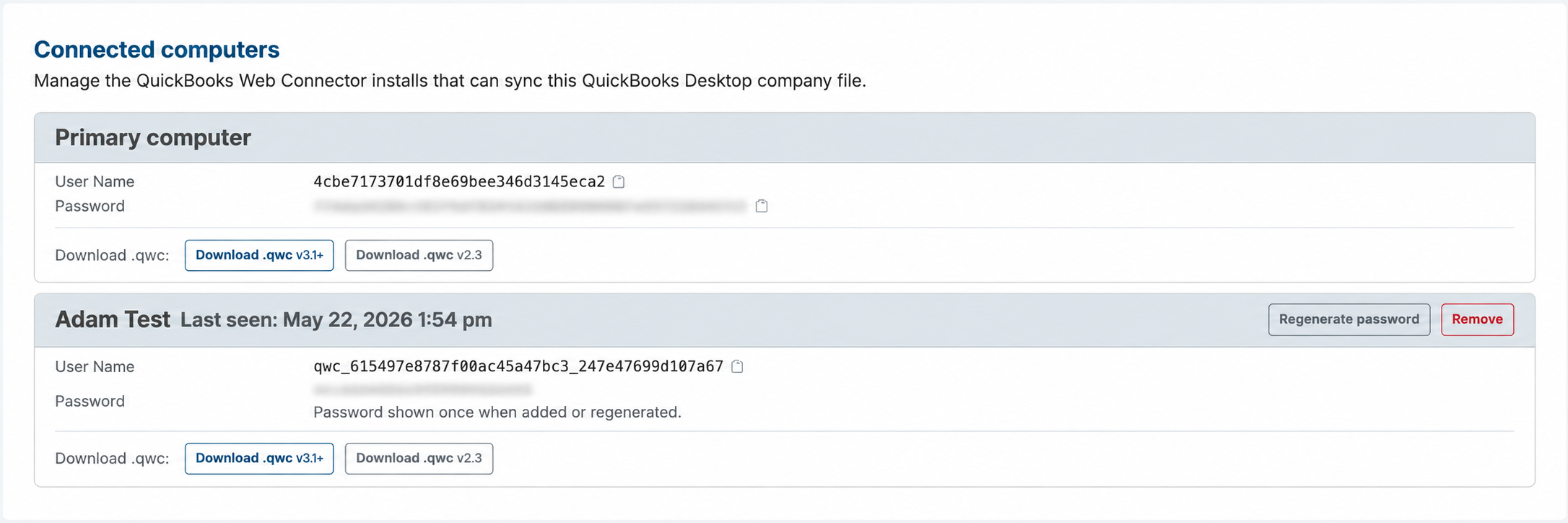
QuickBooks Desktop companies can now add another computer for QuickBooks Web Connector, with per-computer credentials, per-computer QWC file downloads, token regeneration, and connected-computer visibility.
Ability to run the QuickBooks Web Connector from multiple computers
We'd like to be able to have the web connector installed on more than 1 computer that runs our company file. This is possible with our old provider.
2
That means teams have a cleaner way to support more than one Web Connector computer without running into the duplicate setup issues that made this workflow harder than it needed to be. More flexibility, fewer setup headaches.
Clearer Benji Payments decline details in transaction popups
Declined transactions now show more helpful refusal and AVS context directly in the transaction details popup. The goal is simple: less digging, clearer answers, and faster payment troubleshooting right where teams are already looking.
Future Release Groundwork
API improvements are being prepared for a future release
We’ve made several behind-the-scenes updates to API access, permissions, key handling, and version clarity. These changes are groundwork for a future release and are not being announced as customer-facing API changes yet.
Benji Payments decline-event handling keeps getting stronger to support a future release
Elavon card declines can now feed into the same payment-event workflow used by other supported gateways when enabled. This helps create more consistent visibility for customer-actionable declines across payment providers.
Bug Fixes
Billing engine double-invoice protection
We fixed a billing scenario that could incorrectly create a second charge for merchants who converted to paid billing in a specific first-month prebill case. This helps prevent affected merchants from receiving an incorrect duplicate charge.